Steve Jobs

Are we Claude Maxxing?

Nam gave us Claude Max, so let's Claude Maxx.

Scroll to explore
01

Steve needs diamond armour.

Minecraft Steve

Claude is Steve from Minecraft. Capable alone -- but with the right gear, unstoppable.

Skills
+
MCPs
+
Context
+
Verification
=
Diamond Armour
02

What is a skill?

Diamond Armour

A reusable prompt template, invoked via slash command. Loaded on-demand -- doesn't waste context. Think of skills as equippable armour pieces.

Slash command
Load prompt
Execute
Verified output

Remotion

Describe a video in natural language. Claude writes React components that render each frame — animations, subtitles, TTS audio. Full video from a prompt.

Anthropic Official

Document skills: /pdf, /pptx, /xlsx, /docx. Create and edit Office docs and PDFs directly from Claude Code.

03

How skills load.

Progressive disclosure. Two levels — only what's needed enters context.

1
Metadata
Name + description only · ~100 tokens/skill · loads at startup
2
Full Prompt
Complete instructions · loads on invoke only
# SKILL.md — only frontmatter loads at startup
---
name: my-skill
description: When to use this skill
---

# Body loads on-demand when /my-skill is invoked
Full instructions, examples, templates...
Axe sharpening
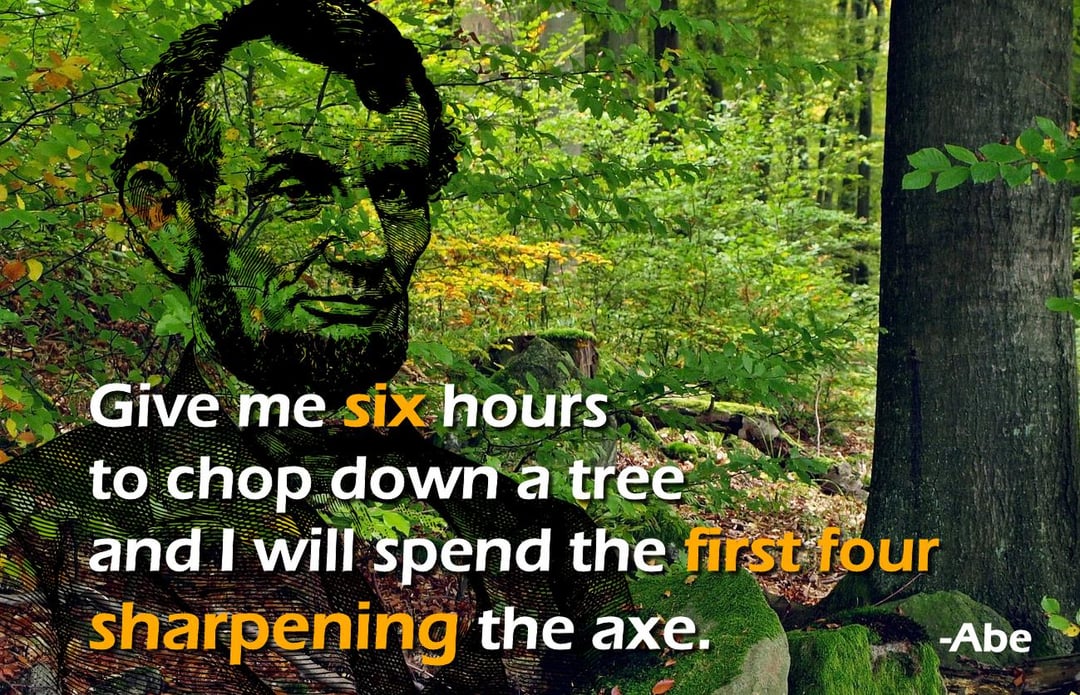
Give me six hours to implement a feature and I will spend the first four writing the prompt.
04

Context is everything.

Crafting Table

Humans are the bottleneck. Claude's output quality is proportional to what you give it.

# CLAUDE.md — your project's persistent memory

- Build: npm run build
- Test: npm run test
- Style: ES modules, not CommonJS
- Architecture: src/features/[name]/
- Always run tests before committing

05

The CoVe model.

Enchanting Table

Chain-of-Verification. Claude tests its own code.

C

Create

Generate initial response from the prompt

o

Outline

Decompose into independent verification questions

V

Verify

Sub-agents check each claim against docs & codebase

e

Emit

Synthesize corrected, verified output

+28%
Accuracy
4
Stages
0
Vibes
06

A CoVe prompt, dissected.

# STAGE 1: CREATE
Implement a Stripe checkout flow for our
Next.js app with price ID lookup.

# STAGE 2: OUTLINE (auto-generated)
- Does stripe.prices.retrieve() exist in v14?
- Is the redirect URL using the App Router pattern?
- Does the webhook verify the Stripe signature?
- Are environment variables named correctly?

# STAGE 3: VERIFY (parallel checks)
✓ stripe.prices.retrieve — confirmed in Stripe SDK
✗ redirect used pages/ pattern — fixed to app/
✓ webhook signature verification present
✗ STRIPE_KEY should be STRIPE_SECRET_KEY — fixed

# STAGE 4: EMIT
Final code with all 4 corrections applied.
/rnv "implement stripe checkout"

Your 5-word prompt gets wrapped in the full CoVe verification framework. The skill modifies how Claude processes your request — your prompt becomes the input to Stage 1, and the skill's instructions drive the remaining three stages autonomously.

07

Give Claude eyes.

Playwright MCP lets Claude control a browser. Build, screenshot, iterate -- autonomously.

Build UI
Screenshot
Evaluate
Fix

Playwright MCP gives Claude a real browser it can control and observe.

08

The enemy: context rot.

Creeper

As the context window fills, quality degrades. Earlier instructions get buried. Output falls off a cliff.

QUALITY TOKENS

We need systems that manage context automatically.

09

Get Shit Done.

Beacon

A context-engineering skillset. 9,200+ GitHub stars. Used at Amazon, Google, Shopify, Webflow.

1
Discuss
Lock decisions
Kill ambiguity
2
Plan
4 parallel researchers
XML task plans
3
Execute
Fresh 200K window
Atomic commits
4
Verify
UAT walkthrough
Auto-diagnose failures
$ npx get-shit-done-cc --global

/gsd:new-project
/gsd:discuss-phase 1
/gsd:plan-phase 1
/gsd:execute-plan 1
/gsd:verify-work 1

GSD under the hood.

All state lives in files, not in context. Sessions are resumable. Context stays clean.

PROJECT.md

High-level vision. Always loaded into context.

ROADMAP.md

Phases, completion status, release tags.

STATE.md

Session memory. Decisions, blockers, current position. The handoff document.

PLAN.md

Executable XML task plans. 2-3 atomic tasks per plan — not docs, but prompts.

Orchestrator stays at ~30-40% context utilization. Each executor gets a fresh 200K window with only the relevant plan files — no conversation history passed down.

10

The Ralph Loop.

Respawn Bed

Autonomous iteration via stop hooks. Named after Ralph Wiggum — persistent iteration despite setbacks. /spidey is a Ralph Loop — it keeps iterating until the UI matches your intent.

PROMPT Define task EXECUTE Fresh 200K window TESTS PASS? Binary check DONE Ship it Yes No → fresh window, try again STOP HOOK

What are stop hooks?

Hooks are shell commands that fire in response to Claude Code events. A stop hook intercepts Claude's exit — the mechanism that makes the Ralph Loop possible.

# .claude/hooks.json
{
  "hooks": {
    "Stop": [{
      "matcher": "",
      "hooks": [{
        "type": "command",
        "command": "cat PROMPT.md"
      }]
    }]
  }
}

When Claude tries to exit, the stop hook fires, feeds the prompt back in, and Claude starts a fresh iteration. The files it changed are still on disk — so each loop builds on the last.

Ralph Loop in the wild.

3 months → a programming language

Geoffrey Huntley ran Claude in a continuous loop for 3 months and built "Cursed" — a fully compiled GenZ-themed programming language like Go, with keywords like slay for functions and sus for variables. Compiles to macOS, Linux, and Windows via LLVM.

$297 for $50K of work

One engineer set up a Ralph Loop before bed. Woke up to 1,100+ commits across 6 repos — including a near-complete port of Browser Use from Python to TypeScript. Total API cost: $297. Traditional contract value: $50,000.

Fruit Ninja in 1 hour

A fully functional Fruit Ninja clone — collision detection, scoring, sound effects — built autonomously in 1 hour across 8 context rotations. Zero human guidance after the initial prompt.

$15K hackathon winner

Affaan Mustafa built zenith.chat entirely with Claude Code in 8 hours at the Anthropic x Forum Ventures hackathon. Won $15K in API credits. The repo hit 16K GitHub stars and 900K views on X.

Nether Portal
Now let's give Steve his portal.
11

Model Context Protocol.

MCPs let Claude interact with external services. Portals to other worlds.

n8n

Create workflows via MCP. Brain dump your process, get a live deployed workflow.

Notion

Screenshot an expense, Claude adds it to your tracker. Any page, any database.

Figma

Design to code. Read Figma files, generate matching components.

Playwright

Browser control. Click, type, screenshot, iterate. Full automation.

12

n8n MCP + Skills: the combo.

The MCP gives Claude tools. The skills teach Claude how to use them well.

You: "automate my Stripe→Slack flow"
n8n MCP
Claude gets 525+ node tools
n8n Skills (7 skills)
Claude knows patterns, syntax, validation

Without skills

Claude has the MCP tools but guesses at expression syntax, misconfigures nodes, gets stuck in validation loops.

With skills

Claude knows {{$json}} syntax, proven workflow patterns, node-specific config, and auto-validates before deploying.

github.com/czlonkowski/n8n-skills — 7 skills, 2,653+ templates

13

My personal recommendations.

Three things to get the most out of Claude Code.

1

Git worktrees & Conductor

Clone repos or use git worktrees. Run Claude Code from terminal or Conductor — not just the IDE. Parallel workstreams on the same repo without conflicts.

2

--dangerously-skip-permissions

Run claude --dangerously-skip-permissions. No approval prompts breaking the flow. Essential for autonomous loops. Use in a sandbox.

3

Let it use CLI tools

Tell Claude to use gcloud CLI, AWS CLI, Supabase CLI, Vercel CLI — whatever's installed. Risky, but allows full end-to-end completion without you copy-pasting between terminals.

14

My skills.

/rnv

CoVe prompting. Wraps any prompt in the 4-stage verification pipeline. Create → Outline → Verify → Emit.

/spidey

Generates a full PRD from a one-liner, derives a task plan from it, configures the Ralph loop, then runs autonomously until every acceptance criterion passes.

/wavybaby

Meta-orchestrator. Analyzes your task, auto-selects optimal skills + MCPs + CoVe. Lazy prompt in, rigorous output out.

/steve

The full stack. Combines GSD's structured project management with Ralph's autonomous execution loop. Generates a PRD, bootstraps .planning/, then runs Ralph until the milestone is complete.

npx skills add aaarnv/claude-skills@rnvCopy
npx skills add aaarnv/claude-skills@spideyCopy
npx skills add aaarnv/claude-skills@wavybabyCopy
npx skills add aaarnv/claude-skills@steveCopy

When to use what.

/rnv — Single task, high correctness

You know exactly what you want. One prompt, one output — but verified.

/rnv "add Stripe checkout to my Next.js app"
/rnv "fix the race condition in our websocket handler"

/spidey — Feature from a one-liner

You have a vague idea. Spidey writes the PRD, plans the tasks, then loops until every acceptance criterion passes.

/spidey "dark mode for the whole app"
/spidey "add a kanban board to the dashboard"

/wavybaby — Don't know which skill to use

Lazy prompt in. Wavybaby figures out which skills, MCPs, and verification level your task needs, then dispatches.

/wavybaby "make the landing page look better"
/wavybaby "set up CI/CD for this repo"

/steve — Multi-day project

Full project lifecycle. PRD → roadmap → phases → plans → autonomous execution with Ralph loops. Resumable across sessions.

/steve "build a SaaS invoicing app"
/steve "rewrite our API from Express to Hono"
One more thing.
15

Happy Coder.

Free, open-source mobile client for Claude Code. Code from anywhere.
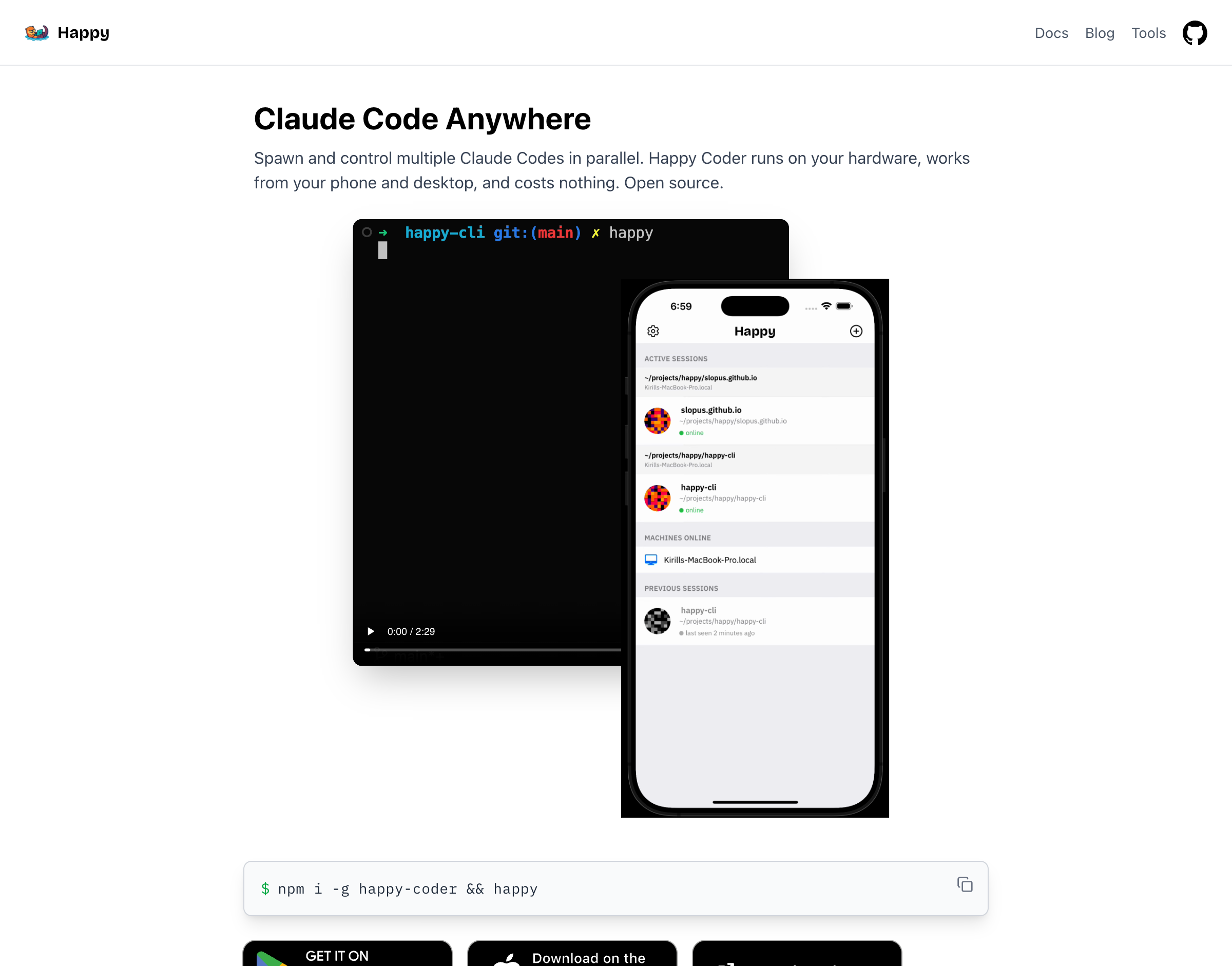
Happy Coder website screenshot
E2E
Encrypted
Voice
Coding
Push
Notifications

happy.engineering  |  npm i -g happy-coder && happy
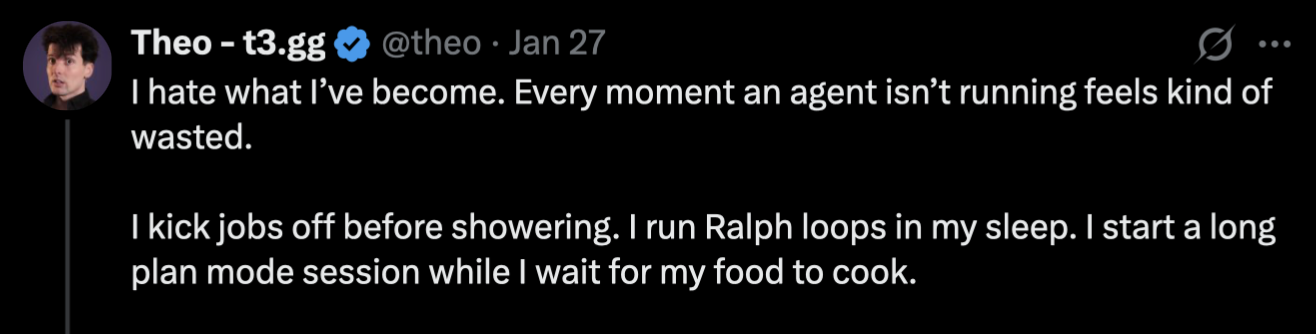
Theo tweet about Ralph loops
Ender Dragon

Start Claude Maxxing.

Read the Docs